
So you’re looking at new flooring and feeling a little overwhelmed by all the choices out there, you’re not alone. With so many materials, styles, and price points available, it can be hard to know which option is right for your home. In this guide, we’ll walk you through the main types of flooring we install and give you the real pros and cons of each, so you can make a confident decision.
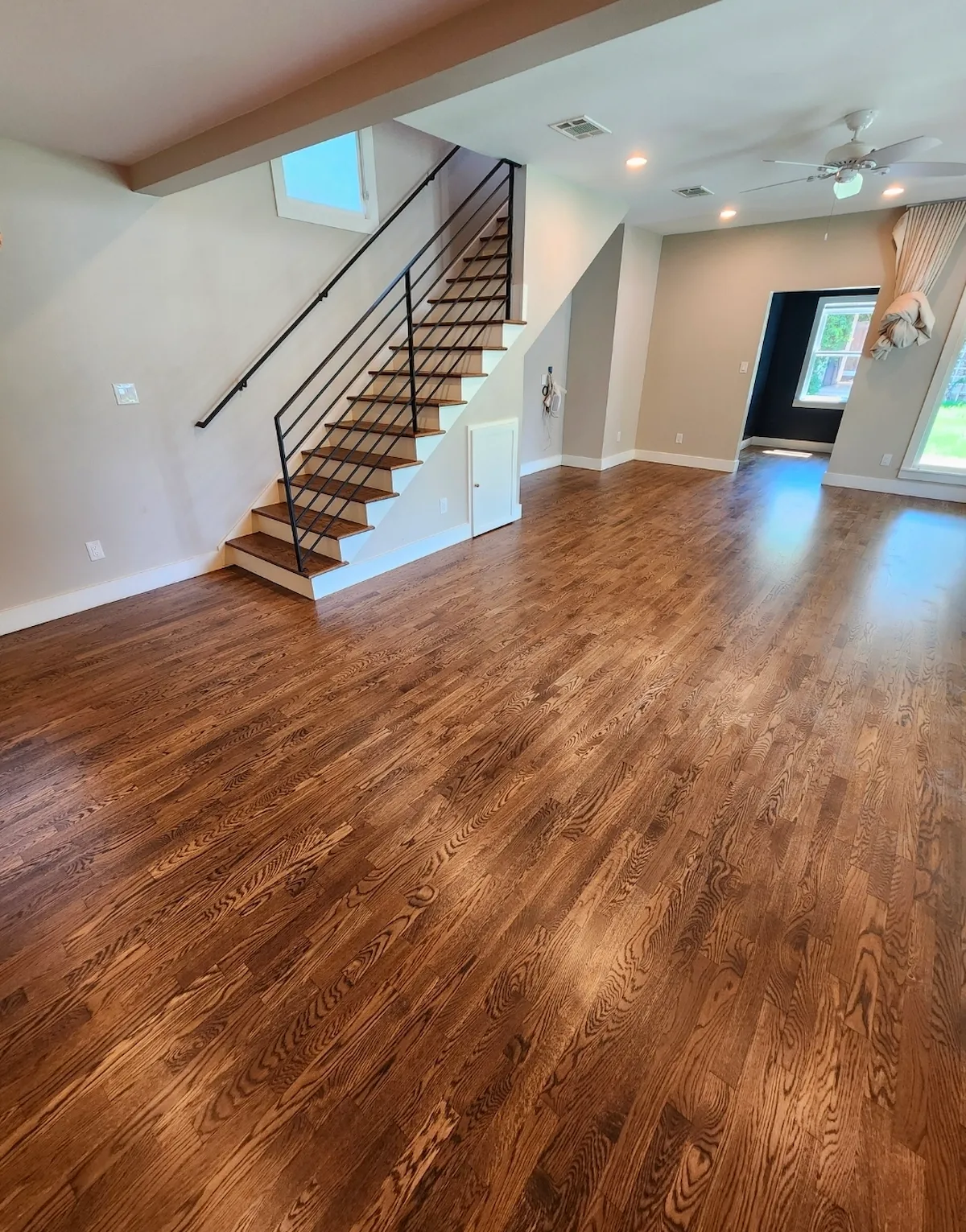
This is the real thing, the classic choice for many homeowners. Popular options include oak, hickory, and pecan because of their availability, reasonable price points, and the ability to stain them in just about any color or shade.
Solid hardwood is beautiful and timeless. You can sand it and refinish it multiple times over the years, which means this floor can last for generations if you take care of it. It adds real value to your home and there’s just something about a real hardwood floor that prefinished stuff can’t quite match.
With solid wood you get that authentic look and feel, and you can customize the finish on site to get exactly what you want. Want a specific stain color? We can make it happen.
Here’s the thing with solid hardwood: it needs time to acclimate on site until it reaches its long-term moisture balance. This process usually takes a couple of weeks. If the floor is installed, sanded, and finished too soon, the boards can cup or warp later on—and nobody wants that.
Solid hardwood also requires a plywood subfloor. If your home sits on a concrete slab, you’re looking at additional cost and time to install that subfloor first. It’s also more susceptible to moisture than some other flooring options, which makes it less ideal for basements or bathrooms.
And yes, solid hardwood tends to be pricier than many alternatives—especially species like mesquite, which is more expensive but valued for its deep red and amber tones and natural resistance to moisture.
This stuff has become really popular, and for good reason.
Prefinished engineered hardwood comes factory-finished, which saves time during installation. This flooring is built in multiple layers (similar to plywood), with each layer running in a different direction. That cross-layer construction keeps the floor more stable, meaning it’s far less likely to expand, contract, or warp compared to solid hardwood.
The top layer is real wood—such as oak, hickory, or another species—and this surface layer is called the wear layer. Most engineered hardwood has a wear layer around 1.5mm to 2mm thick, with an overall thickness typically between 3/8″ and 1/2″.
Because of its layered construction, engineered hardwood handles moisture better than solid wood and is more dimensionally stable. Installation is usually quicker as well, since there’s no waiting for on-site sanding or finish to cure.
Here’s something important to know: not all prefinished engineered hardwood is created equal. Many manufacturers claim to have a “super strong” finish, but that’s not always the case. A simple test is to hold a sample up to the light and try to lightly scratch it with your thumbnail. If it scratches easily, it’s not a finish you want. We always make sure the products we recommend pass this test.
The thickness of the wear layer determines how many times the floor can be refinished. With a thinner wear layer, you may only be able to sand and refinish it once or twice, compared to solid hardwood, which can typically be refinished many more times.
And while prefinished flooring is convenient, it just can’t hold a candle to site-finished hardwood when it comes to achieving a seamless, fully custom look.
This option is often the best of both worlds in many situations.
Unfinished engineered hardwood floors have become extremely common in recent years because they can often be glued directly to a concrete slab, eliminating the need for a plywood subfloor like with solid hardwood. These floors are site-finished, so once we’re done, you can’t tell the difference between this and traditional solid wood. Plus, the top wear layer is typically thick enough to allow for multiple refinishing cycles over the years.
You get the stability of engineered wood with the custom, seamless finish quality of solid hardwood. If your project doesn’t have time for solid wood to fully acclimate, this is often the best choice while still achieving an authentic site-finished look.
Because these floors are sanded and finished on site, you’re looking at similar curing times as solid hardwood, along with needing to stay out of the area for a few days. Some finishes may also have a noticeable urethane odor during the curing process.
Cost-wise, unfinished engineered hardwood typically falls somewhere between prefinished engineered and solid hardwood.
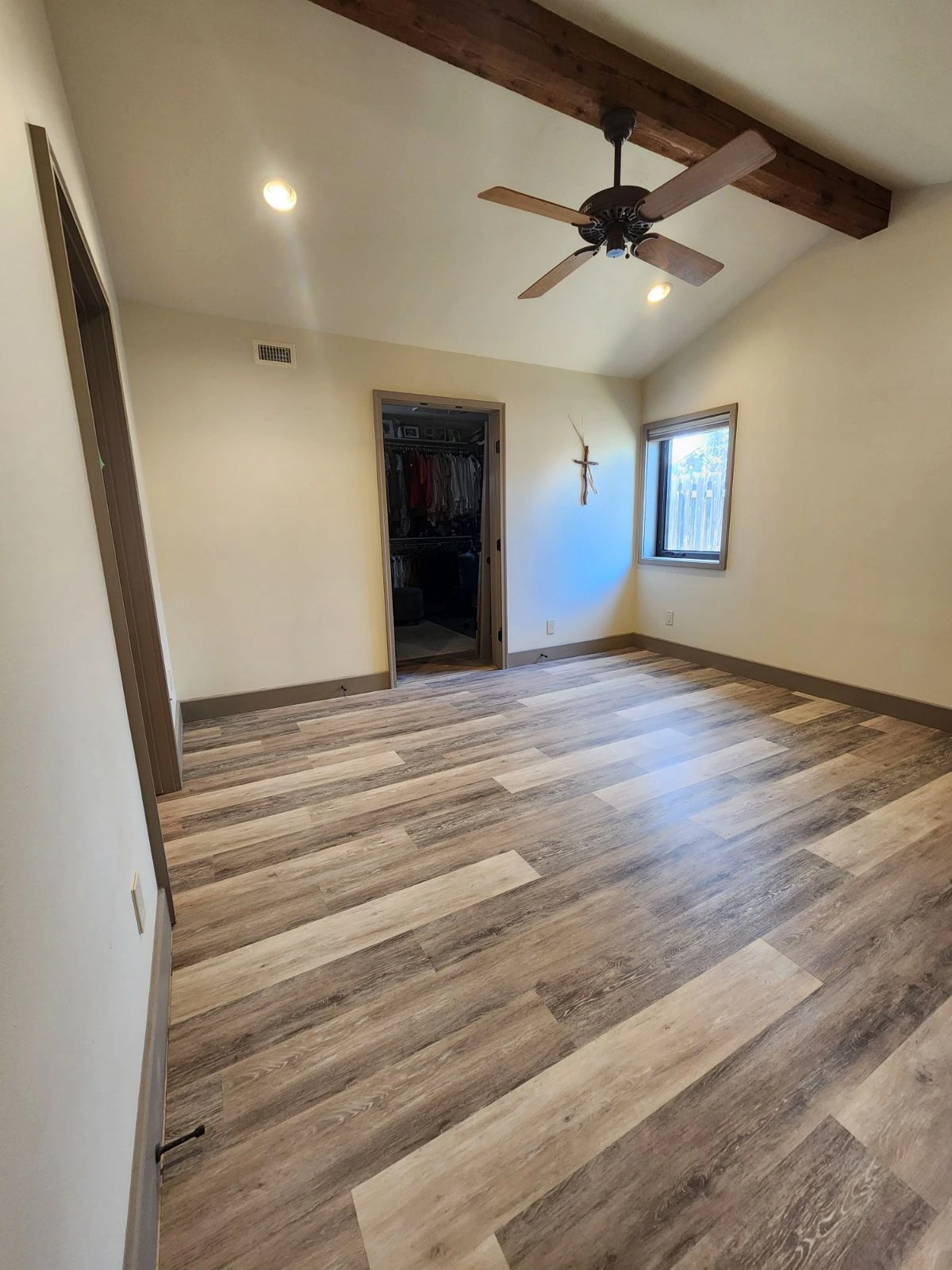
Luxury vinyl plank (LVP) is extremely durable and highly water-resistant, making it a great option for kitchens, bathrooms, basements, and anywhere moisture could be an issue. It’s also typically one of the most budget-friendly flooring choices available.
There are two main types of LVP. The first is click-lock, which installs as a floating floor. Most click-lock products come with an attached pad, although some require a separate underlayment. The second option is glue-down vinyl plank. Glue-down LVP is often more durable and commonly used in commercial settings because it doesn’t rely on the thinner tongue-and-groove locking system found in floating floors.
Installation is generally quick and straightforward. While most LVP products are designed to mimic hardwood flooring, there are also styles available that resemble tile and stone.
LVP isn’t real wood, so if you’re looking for that authentic hardwood look and feel underfoot, this may not be the right choice. Lower-end products can also look repetitive or plasticky.
With click-lock LVP, the tongue-and-groove locking system can be somewhat fragile. In homes with heavy furniture or high traffic, this can sometimes lead to issues over time.
LVP also doesn’t add the same resale value as real hardwood. And if a plank becomes damaged, replacement can be tricky depending on how the floor was installed.
Ceramic and porcelain tile are solid choices for certain areas of the home.
Tile is extremely durable and highly water-resistant, making it ideal for bathrooms, entryways, kitchens, and any space that may get wet. It’s easy to clean and maintain, and there’s an enormous variety of styles, colors, and patterns available.
Quality tile can last for decades without needing replacement. It’s also a great option for households with allergies, since it doesn’t trap dust and allergens the way carpet can.
Tile is hard and can feel cold underfoot, which isn’t always the most comfortable option if you’re standing for long periods of time. Grout lines also require regular cleaning and maintenance, and grout can stain over time.
Installation is more labor-intensive than most flooring types, which usually means higher installation costs. If a tile cracks, replacing just one piece can be difficult—especially if you don’t have extra tiles left over from the original installation.
Natural stone tile requires ongoing maintenance and can be more susceptible to damage than porcelain or ceramic tile.
Good carpet still has its place in many homes.
Carpet is soft and warm underfoot, making it a comfortable choice for bedrooms and living areas. It provides good insulation and helps reduce noise, which is especially nice in multi-level homes. Carpet is also generally less expensive than most hardwood options.
There’s a wide range of styles, colors, and textures to choose from. It’s also a safer option for young children and elderly family members since it’s softer to fall on than hard surfaces.
Carpet stains, there’s really no getting around that. Even with stain-resistant treatments, spills can still cause issues. It also tends to trap allergens, dust, and pet dander, which isn’t ideal for households dealing with allergies or asthma.
Carpet typically wears out faster than hard-surface flooring and may need replacement every 5–15 years, depending on the quality and level of traffic. In high-traffic areas, it can begin to look worn or dingy relatively quickly.
Laminate is a budget-friendly option that offers a hardwood look without the hardwood price tag.
Laminate is a budget-friendly flooring option that offers a realistic hardwood look at a lower price point. It’s often more scratch-resistant than some hardwood options and is generally easy to maintain. Installation is usually straightforward, and many laminate products feature click-lock systems that are DIY-friendly.
One important distinction is that laminate and vinyl plank are not the same product. Laminate typically has a fiberboard core with a photographic layer and protective top coating, while vinyl plank is made from synthetic materials and is fully waterproof. Laminate can handle minor moisture better than solid hardwood, but it is not waterproof like LVP.
Modern laminate flooring has come a long way in appearance and can look surprisingly convincing when installed properly.
If water gets into the seams, laminate can swell and warp, and once that happens it usually has to be replaced. Unlike real wood, laminate cannot be sanded or refinished, so when it’s worn out, replacement is the only option.
Laminate can sometimes sound hollow underfoot, and it doesn’t add the same resale value as real hardwood. Lower-end laminate products can also look obviously fake.
Choosing the best flooring really comes down to your specific situation. What’s your budget? How long do you plan to stay in the home? What kind of foot traffic will the floor see? Are there moisture concerns? How important is resale value to you?
If you want something that can last for generations and add real value to your home, solid hardwood or unfinished engineered hardwood is hard to beat. If you need something water-resistant and budget-friendly, luxury vinyl plank is often a smart choice. For a quicker upgrade that still looks great, prefinished engineered hardwood can be a solid middle ground.
And here’s a little inside tip: many flooring products get discontinued due to color changes, style updates, or product line refreshes—not because there’s anything wrong with them. That means buying discontinued or clearance materials can sometimes save you a substantial amount of money. (Only half joking.)
If you’d like to talk through your specific situation and see what makes the most sense for your home, feel free to reach out. We’re happy to look at samples, discuss your needs, and help you narrow down the best option—no pressure, just honest advice.
Remember, if you have to do it twice, it’s not cost-effective. Taking the time to choose the right flooring the first time is always worth it.
Not sure which flooring option is right for your home? Contact Habitat Heroes Floors & Painting to schedule a free consultation or in-home estimate. We’ll walk through your options, show samples, and help you choose the best flooring for your space and budget.